Emergency Rescue
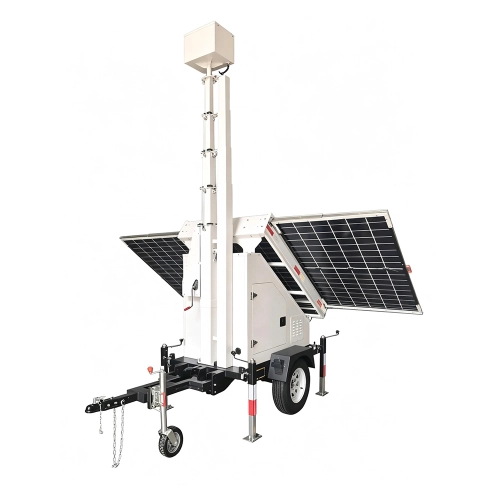
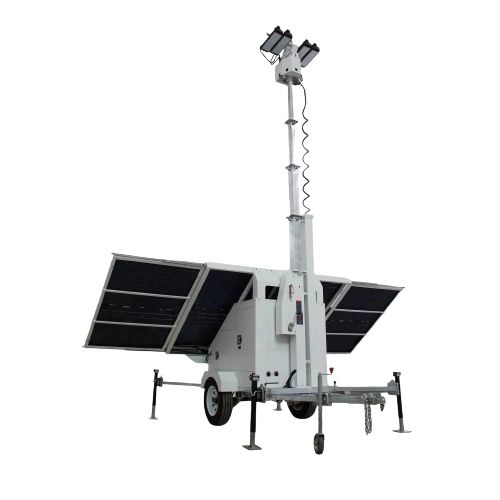
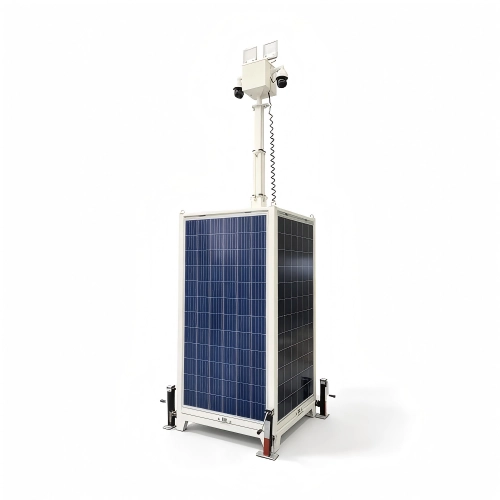
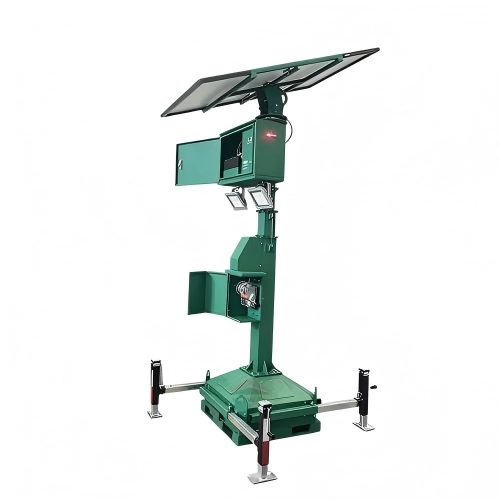
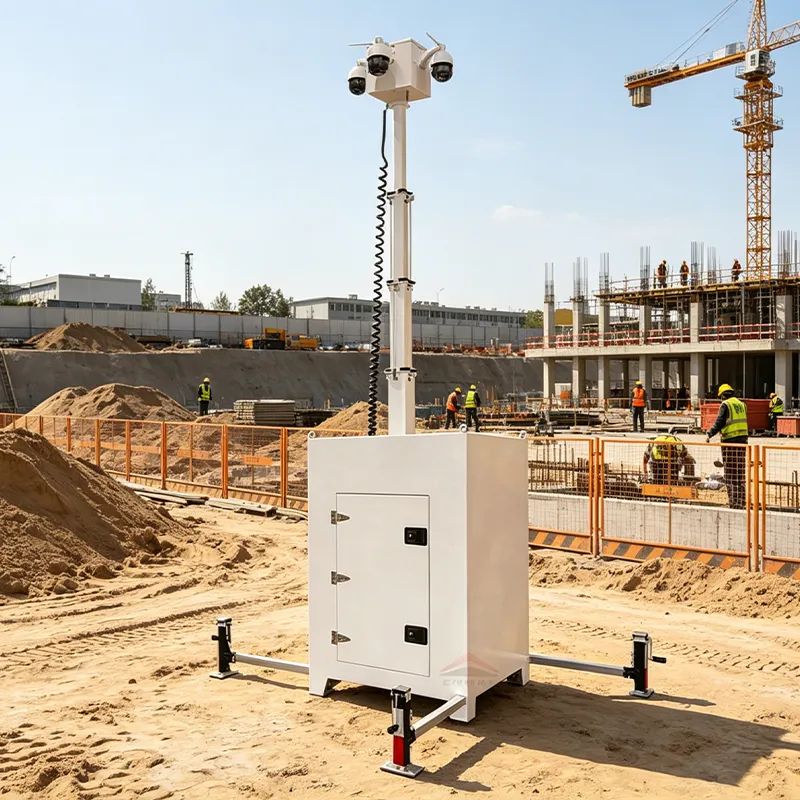
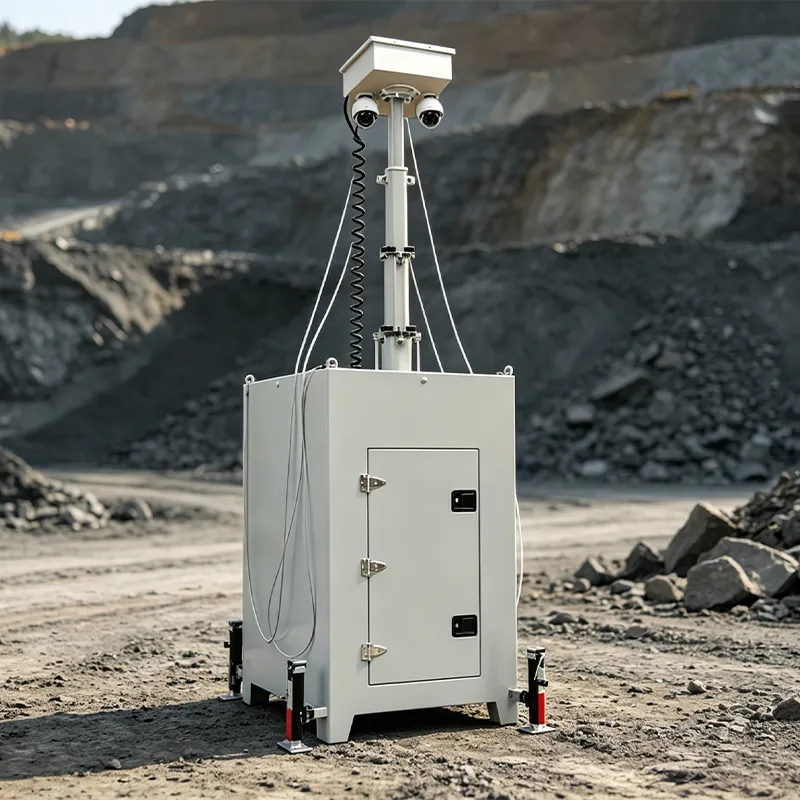
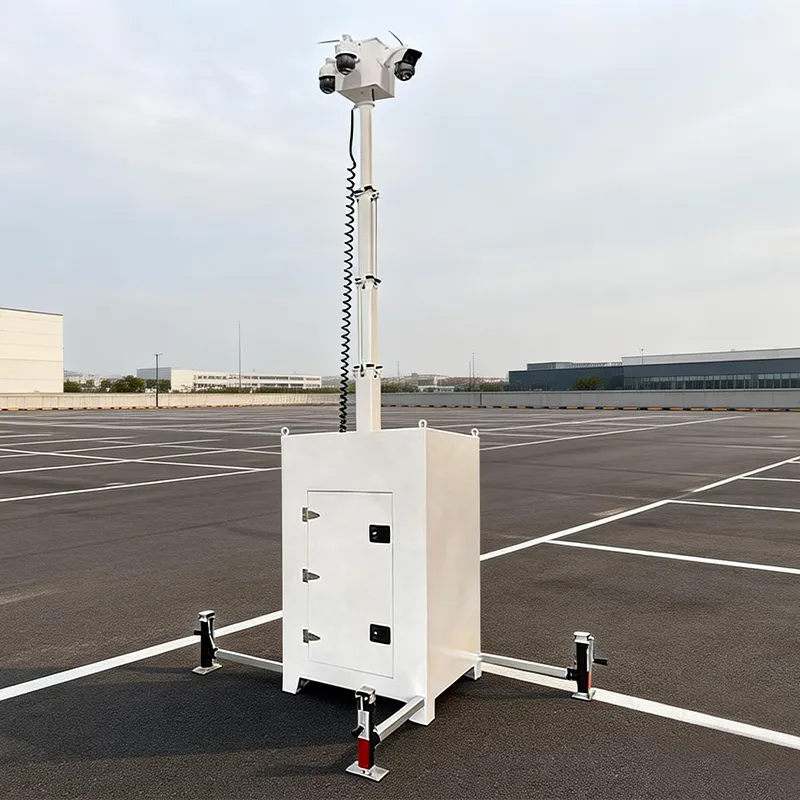
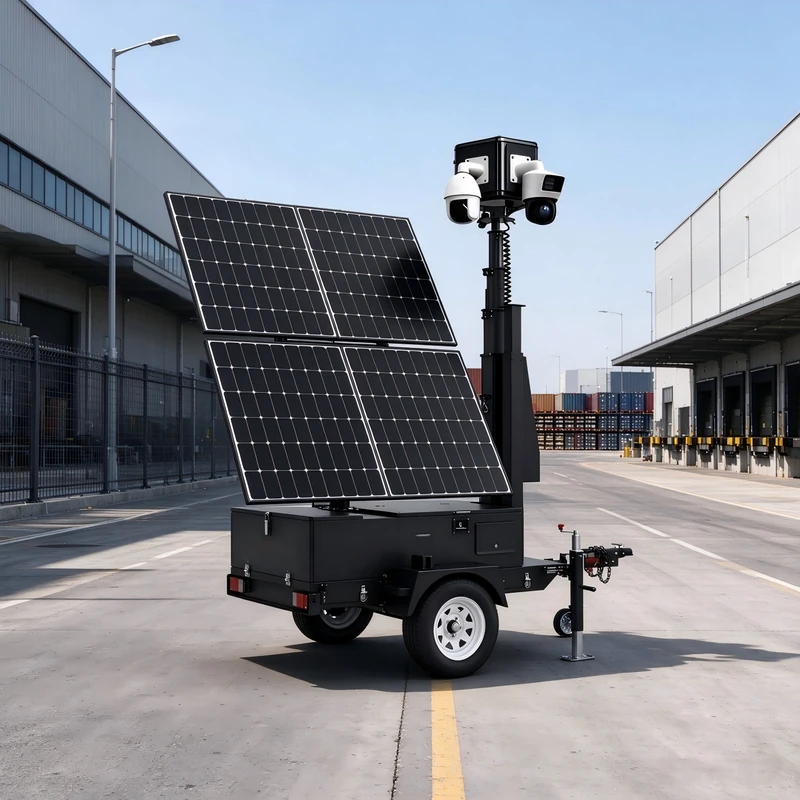
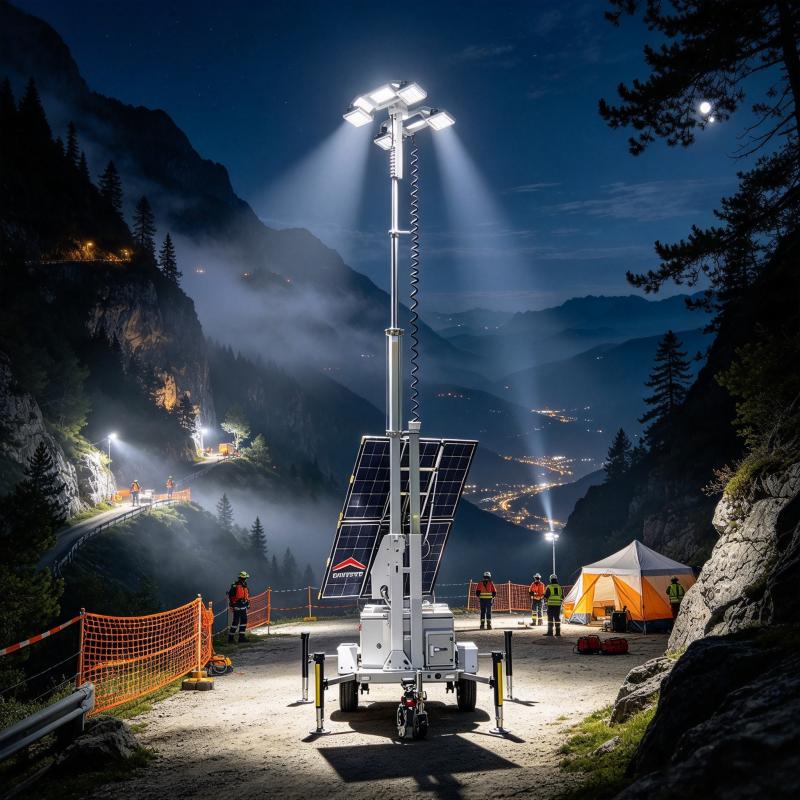
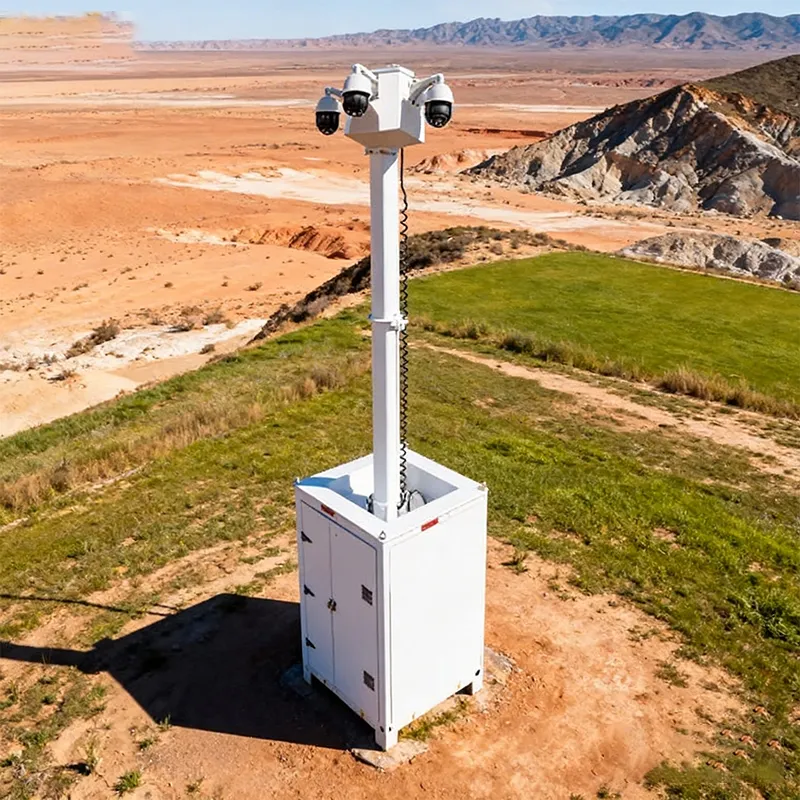
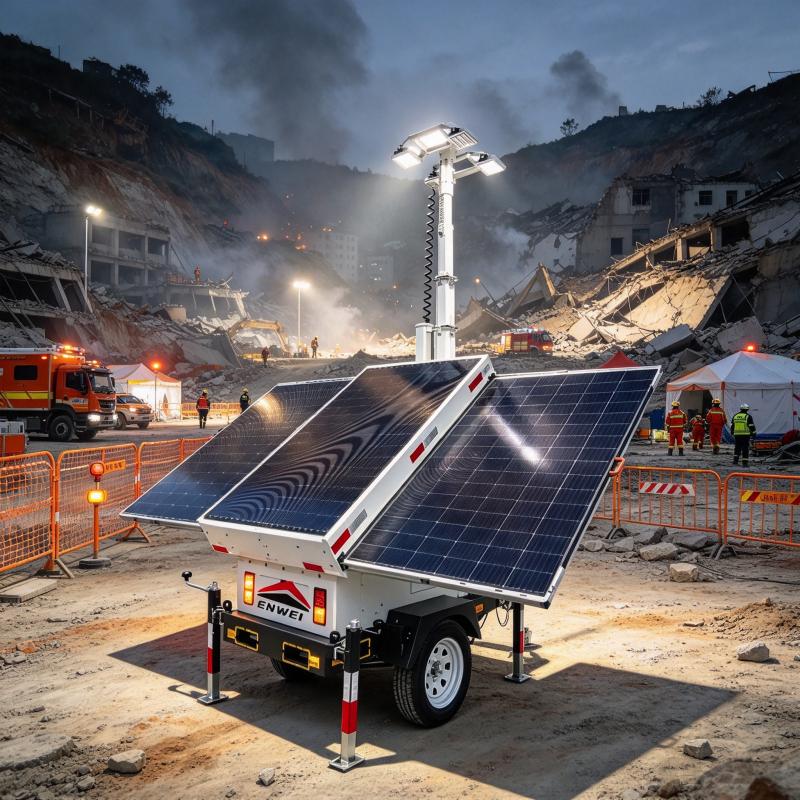
During emergency rescue operations, power is usually cut off, there is no network, the terrain is complex, and night-time operations account for a high proportion. Traditional monitoring or traditional lighting are difficult to be quickly deployed in such situations where there is no power or network. The solar monitoring and lighting trailer integrates off-grid power supply, rapid deployment, wide-area lighting, and real-time high-definition monitoring. Once on-site, it can be put into use immediately, providing crucial support for on-site operations, rescue command, and personnel safety. It can be used more stably even in extreme environments.
Solar Trailers Advantages
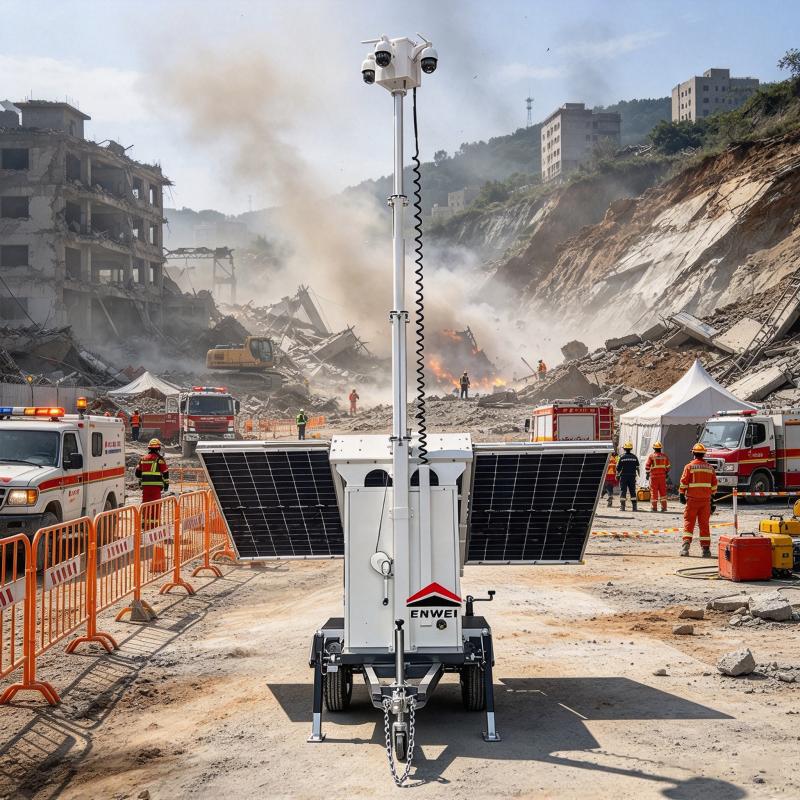
Quick deployment
Once on site, it can be quickly set up without the need for wiring or cables, allowing for the optimal rescue period to be
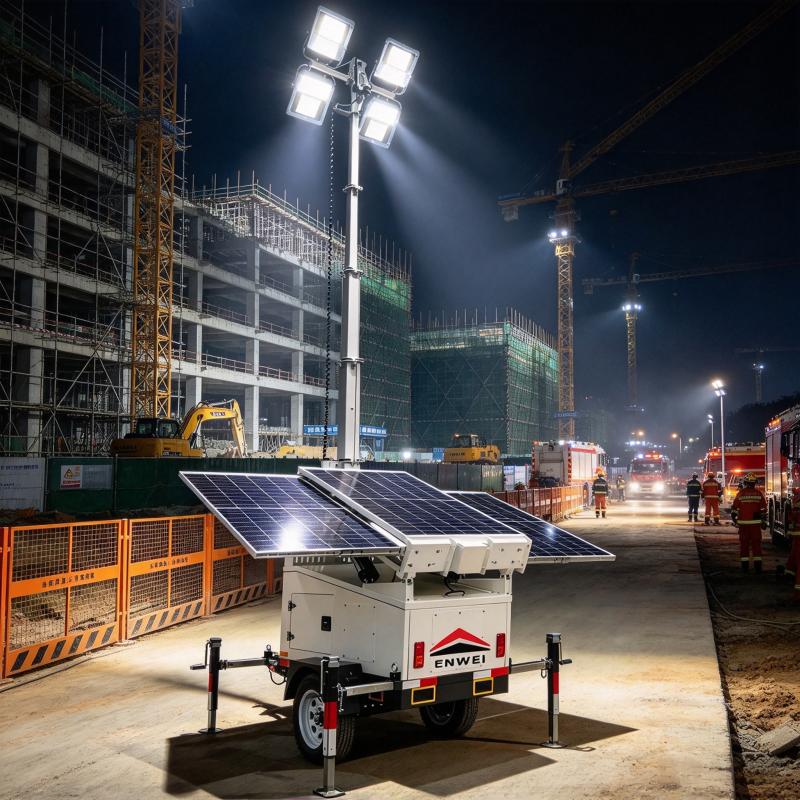
Easy to Tow
It can be towed by a regular pickup truck, an off-road vehicle or a forklift. Compared to traditional monitoring equipment or traditional lighting devices, it can reach the rescue site more quickly.
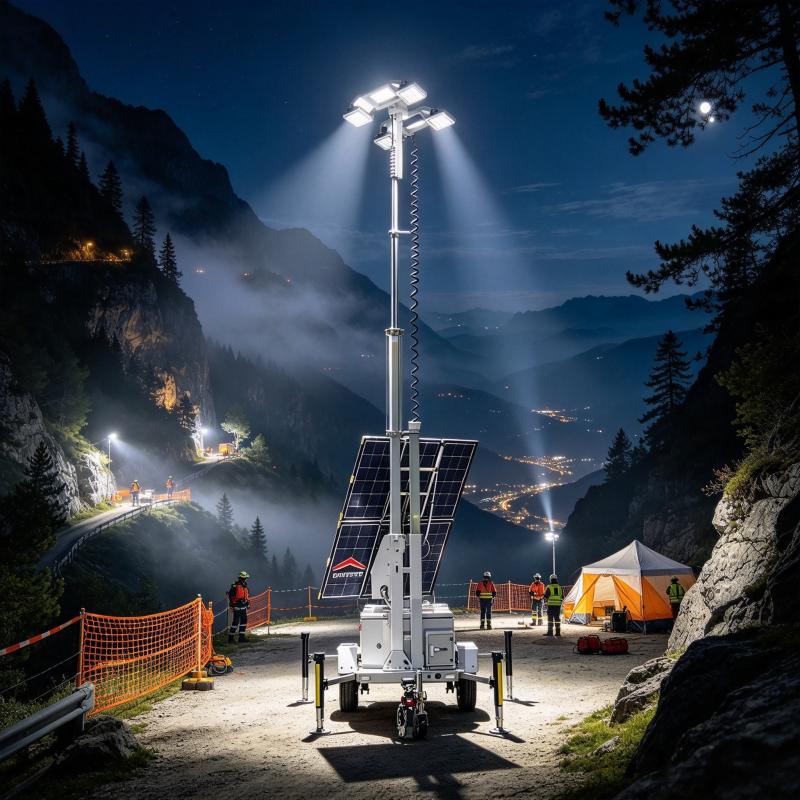
Grid-Free Power
When a disaster causes the power grid to fail, the solar trailer can still operate normally. During the day, the solar panels charge the battery, and at night, the battery discharges to form an independent power grid.
Wide Lighting Coverage
The power of the LED lights can be adjusted according to the requirements, and the lamp head can rotate 360 degrees, enabling both directional and floodlighting.
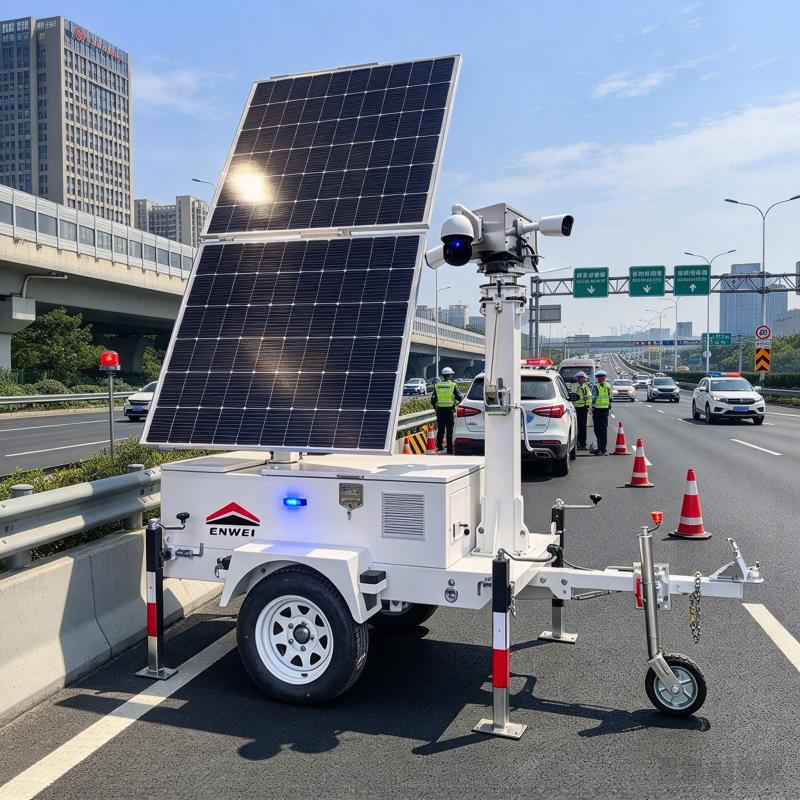
Real-Time Monitoring
A temporary monitoring network can be quickly established, and it has multiple return transmission methods, which can provide a basis for the decision-making of emergency rescue operations.
Our Solutions
ENWEI provides economical and reliable lighting and safety guarantee solutions for emergency rescue sites, with over 10 years of experience. Our core business has always been dedicated to helping emergency management departments, fire rescue or social emergency rescue units address the critical needs of power, network and lighting shortages in disaster-stricken areas. Meanwhile, we have deployed monitoring and lighting systems for emergency rescue scenarios globally, achieving point-to-point on-site reliability.
We will closely collaborate with your team and departments, from the initial design to system integration, factory inspection and shipment, including after-sales services. We can track all aspects throughout the process and ensure a rapid delivery.
ROI
Cost
Firstly, in terms of cost, during disaster relief operations, diesel supply is difficult and the cost of fuel is high. However, solar panel trucks consume no fuel. During the day when there is sunlight, they can supply power in a continuous cycle. The cost of fuel can cover the premium for solar equipment.
Manpower and time
Secondly, in terms of manpower substitution and time, rescue guarantees can be provided within the golden rescue period. However, human intervention is unable to conduct long-term monitoring or provide rapid data transmission.
Various scenarios
Finally, it can be used in various scenarios. It is not only applicable to emergency rescue sites, but also suitable for daily security and lighting in mining areas, construction sites, temporary construction sites, or for the support of large-scale events and activities.
FAQ
The trailer can be deployed within 10 to 15 minutes without the need for wiring or connection. The steps are: fix the legs, unfold the solar panels, raise the mast, adjust the overall lamp head and camera angles, and establish a remote connection.
Whether it is a solar monitoring trailer or a solar lighting trailer, they are all equipped with adjustable legs that can be leveled within a certain slope. At the same time, in case of strong wind conditions, wind-resistant ropes can be used for reinforcement and stabilization.
Both the solar monitoring trailer and the solar lighting trailer adopt a stand-alone off-grid power supply system consisting of solar panels and gel batteries. They do not rely on the power grid. During the day, the solar panels charge, and at night, the batteries discharge to form an independent power grid for the trailer.